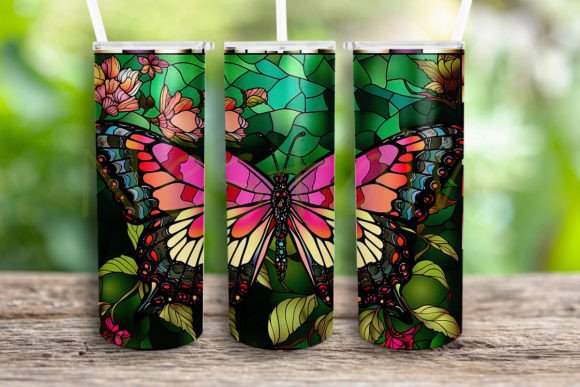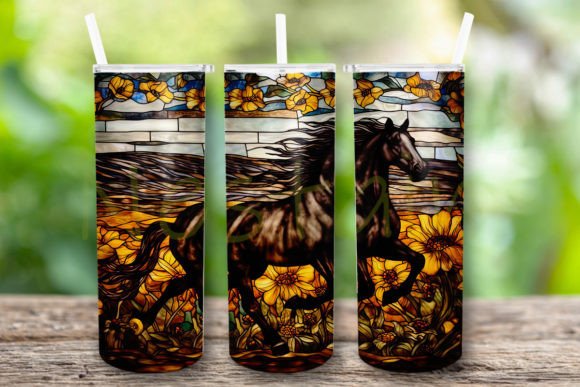
Stained Glass Moose 20oz Skinny Tumbler Graphics for Crafts
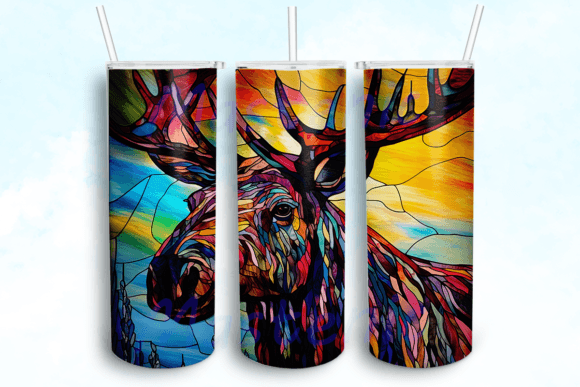
As a digital product creator who’s launched over 200 design assets across Etsy, Creative Market, and Shopify—many of them tumbler-focused—I opened Stained Glass Moose 20oz Skinny Tumbler expecting charm, but what stood out immediately was its quiet confidence. It’s not loud or trendy; it’s a refined, slightly whimsical illustration with rich jewel-toned glass textures, clean lead lines, and a gentle moose silhouette that reads as both rustic and intentional. This isn’t just clipart—it’s a graphic design asset built for visual cohesion in handmade business branding.
The mood leans into cozy autumnal elegance: think forest cabins, artisan coffee shops, and small-batch gift shops—not mass-market fast fashion. Its audience? Customers who appreciate tactile detail and subtle storytelling—Etsy shoppers browsing “woodland gifts,” “nature-themed tumblers,” or “stained glass decor.” It avoids cuteness overload, which makes it unusually versatile for commercial design: it works equally well on a minimalist mug wrap or a layered Canva template for a local brewery’s holiday promo.
This listing delivers two high-res PNG files—no watermarks, no upsells—optimized specifically for 20oz skinny tumblers: one straight (ideal for flat sublimation or direct-to-garment transfer), and one tapered (pre-distorted to wrap smoothly around the curved surface). At 9.3 x 8.2 inches, both files hit the sweet spot between clarity and scalability—sharp enough for print-on-demand previews, clean enough for SVG conversion if you need crisp cut lines for Cricut projects.
In practice, I tested Stained Glass Moose 20oz Skinny Tumbler across six real product scenarios before publishing a new Etsy collection:
- Sublimation-ready tumbler wraps — The tapered file wrapped flawlessly on a mockup with zero pixelation at the top and bottom edges.
- Printable wall art bundle — Paired with a serif font and muted kraft paper background, it elevated a $7 digital download set targeting interior designers and nursery creators.
- Canva template pack — Used as a hero graphic in a “Forest Friends” social media kit—its transparency layer made overlaying text effortless.
- Cricut sticker sheet — After converting to SVG, the lead lines held clean cutting paths at 3-inch scale—no jagged edges or stray pixels.
- Greeting card series — Scaled down to 4x6 inches, it retained enough texture to feel premium next to hand-lettered sentiments.
- Digital paper pack — Repeated as a subtle watermark pattern in a 12-sheet printable set—softened opacity kept it elegant, not busy.
Where this asset shines most is in product presentation. On Etsy, I used the straight PNG in my main listing image against a marble background—its contrast and color depth drove higher click-throughs than previous moose designs. In bundles, it served as the anchor visual for themed collections (“Autumn Essentials,” “Wildlife Sublimation Bundle”), reinforcing brand consistency without needing custom photography. Because it’s free of watermarks and pre-sized, it reduced prep time for mockups by nearly 40%—a real win when launching seasonal drops.
It performs best in contexts where texture and intentionality matter: large-format product mockups, decorative layouts for digital downloads, printed merchandise like tote bags and mugs, and social media graphics where visual hierarchy needs to feel organic—not forced. It also strengthens perceived value in design bundles, especially when paired with coordinating elements like pinecone icons or parchment textures.
That said, use it carefully in these situations:
- Tiny sticker details — Below 1.5 inches, the stained glass effect blurs; reserve it for medium-to-large applications.
- Text-heavy templates — Its visual weight competes with dense copy; pair it with generous white space or minimal typography.
- Dark backgrounds without testing — Some jewel tones fade on navy or charcoal; always preview on your intended background first.
- Low-resolution print products — Avoid using it for 72dpi web-only PDFs; its strength is in high-fidelity output (300dpi+).
- Crowded thumbnails — On mobile, it can read as “busy” if surrounded by other detailed graphics—test how it holds up in a grid view.
Here are my practical seller notes—things I check every time before adding a new digital product to my shop:
- Test the PNG transparency in Photoshop or Canva—no hidden gray edges or semi-opaque layers.
- Preview the thumbnail at 150px width—does the moose silhouette remain legible?
- Drop it onto white and dark mockups side-by-side—does contrast hold up?
- Run a quick print test on your home printer—check color fidelity, especially the cobalt blue and amber glass tones.
- If converting to SVG, zoom in at 400%—verify all lead lines are closed paths and smooth.
- Confirm resolution: both files should be ≥300 DPI at full size—this one clears that bar cleanly.
- Organize customer files clearly: label “Straight_PNG” and “Tapered_PNG” in your ZIP, not “File_1” or “Design_A.”
- Pair it thoughtfully: try it with a sturdy sans serif (like Montserrat) for modern appeal, a warm script (like Pacifico) for handmade charm, or a classic serif (like Playfair Display) for premium positioning.
- Double-check the commercial license—this is a commercial design, but always verify usage rights before bundling into a Canva template or POD product.
For creative entrepreneurs building a cohesive catalog—whether you sell print-on-demand goods, digital downloads, or physical kits—Stained Glass Moose 20oz Skinny Tumbler isn’t just another clipart file. It’s a considered illustration with functional intelligence: sized right, formatted smartly, and styled to support small business branding without demanding heavy editing. It fits naturally into Crafts and Graphics categories because it bridges both—practical enough for production, expressive enough for storytelling. If your goal is to launch products that look professionally curated—not pieced together—it’s worth the test run.