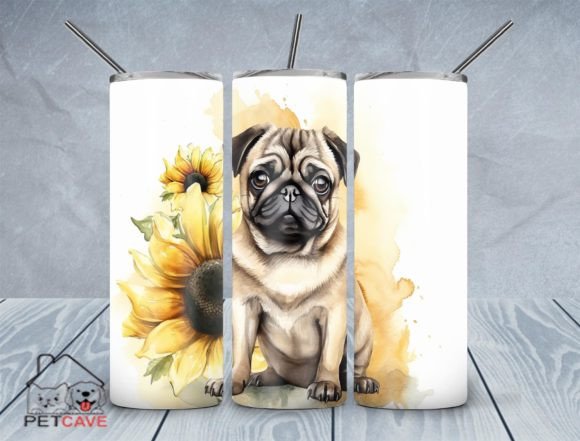
Pug Watercolor Tumbler 20 Oz
First Impressions: A Playful, Soft-Focus Statement
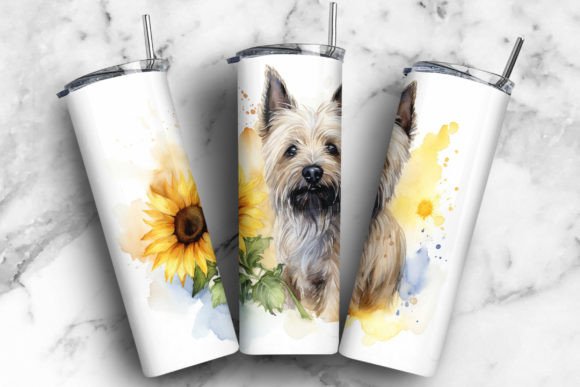
Opening the ZIP for Pug Watercolor Tumbler 20 Oz, I immediately noticed how the watercolor texture breathes life into the pug’s expression—loose edges, subtle pigment bleed, and gentle tonal shifts that avoid cartoonish rigidity. It’s not a vector-perfect mascot; it’s a hand-painted moment captured in high-res PNG. The straight and tapered versions (both 9.3” x 8.2”, 300 DPI) suggest thoughtful adaptation for flat and contoured surfaces—but remember: these are *graphics*, not native embroidery files. As a designer who’s stitched hundreds of pet-themed pieces, I appreciated how the composition avoids tight corners and overworked details. That soft watercolor halo around the pug’s muzzle? It translates beautifully to satin stitch gradients or low-density fill stitch—not as literal pigment, but as visual softness in thread.
Where It Shines: Real Projects, Real Customers
Last week, I prepped a batch of custom embroidered tote bags for a local dog rescue fundraiser. I tested Pug Watercolor Tumbler 20 Oz on heavyweight canvas with medium-cutaway stabilizer—and it landed perfectly. The design’s generous proportions gave breathing room for clean stitching, and the tapered version wrapped elegantly around the bag’s side seam without distortion. I’ve also used it on organic cotton sweatshirts for a boutique launch: customers consistently commented on how “un-stuffy” and warm the pug felt—like a friend’s doodle, not stock art. It works especially well for baby embroidery (think onesies or burp cloths), where parents respond to charm over precision. And yes—it’s been a quiet bestseller as an embroidered patch on denim jackets at craft fairs. The watercolor mood reads as handmade, not mass-produced, which builds trust for Etsy sellers and small shop owners pricing for intention, not just labor.
Where to Pause—and Why
This isn’t a one-size-fits-all embroidery file. Because it’s delivered as PNGs only, you’ll need to digitize it yourself—or hire a digitizer—before stitching. That means extra time, cost, and judgment calls about stitch type, density, and underlay. I wouldn’t recommend using Pug Watercolor Tumbler 20 Oz on thin jersey tees without significant simplification: the original detail won’t hold up on stretchy fabric, and dense fill areas could cause puckering. Likewise, curved surfaces like caps demand careful tapering—so while the tapered PNG is helpful, it’s still a starting point, not a finished cap-ready file. Dark fabrics require contrast testing: watercolor grays and muted browns can disappear without adjusting thread saturation or adding subtle outline stitches. And if your small hoop maxes out at 4x4”, this design simply won’t fit without scaling down—and losing its expressive scale and softness.
Design Notes Every Embroiderer Should Check
- Test first on scrap fabric—especially if stitching on textured weaves like linen tea towels or looped terry cloth.
- Review stitch density early: watercolor effects often rely on open, breathable fills. Over-digitizing with heavy fill stitch kills the airy feel.
- Confirm hoop size compatibility before digitizing—you’ll likely need at least a 5x7” or larger hoop for full fidelity.
- Inspect small details like the pug’s nostrils or ear folds: they may need manual cleanup or simplification to stitch cleanly at real-world sizes.
- Mock it up in black and white to assess value contrast—what reads as soft gray on screen may vanish in thread.
- Compare light vs. dark fabric backgrounds visually and physically: what looks balanced on screen may need shadow or highlight reinforcement in thread.
- Use appropriate stabilizer: medium cutaway for knits, tear-away for stable wovens, and lightweight fusible for delicate baby items.
- Verify licensing before selling finished products or reselling digitized versions—this listing provides graphics only, not commercial embroidery rights by default.
How It Elevates Your Craft Business
For Etsy sellers and creative entrepreneurs, Pug Watercolor Tumbler 20 Oz adds quiet sophistication to otherwise predictable pet-themed listings. It doesn’t scream “cute”—it invites pause. That nuance lifts perceived value: customers pay more for designs that feel intentional, not algorithm-generated. When used on personalized gifts—say, a holiday embroidered pillow cover for a pug owner—the watercolor softness reads as tender, not trendy. And because it’s scalable and mood-driven, it fits seamlessly into cohesive brand storytelling: imagine pairing it with hand-lettered “Brew & Pugs” text on a kitchen towel set, or using the same palette across digital product previews and physical embroidery samples. It supports consistency without demanding rigid replication.
A Final Thought for Makers
This isn’t just another pug graphic. Pug Watercolor Tumbler 20 Oz is a mood, a texture, a quiet invitation to slow down in your embroidery process. It rewards thoughtful digitization, honors fabric choice, and connects with buyers who value handmade authenticity over polished perfection. If you’re curating design assets for a craft business—or choosing your next embroidered tote bag, sweatshirt, or baby item—treat it as a starting point worth investing time into. Because when done right, it doesn’t just sit on fabric. It lives there.