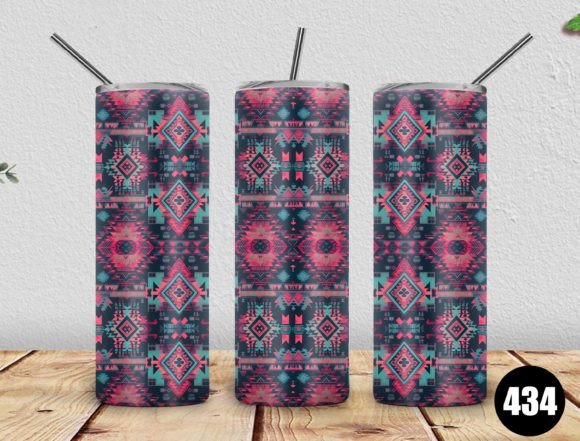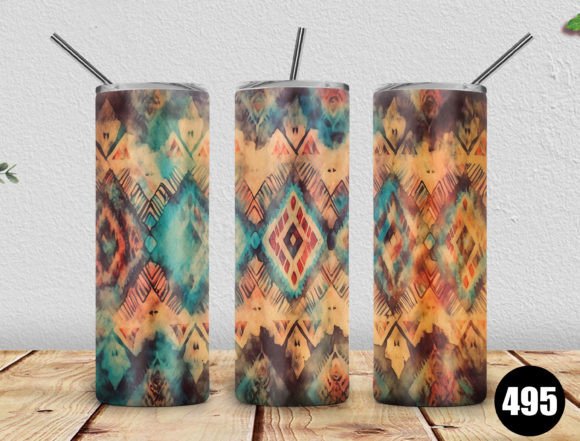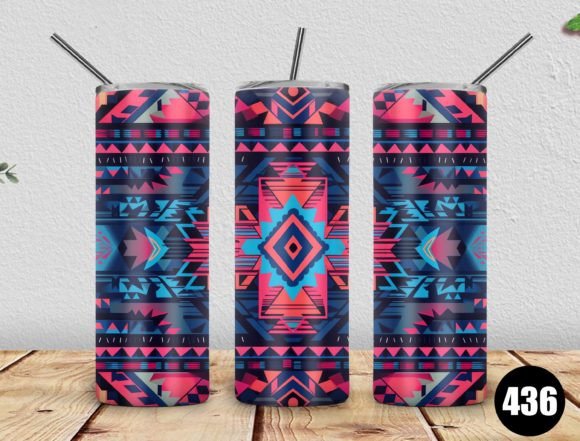
Aztec Pink Blue Western 20oz
First Impressions: Bold, Balanced, and Ready for Real Fabric
When I opened the Aztec Pink Blue Western 20oz files—straight and taper PNGs at 300 DPI—I felt that familiar designer spark: this isn’t just a pattern; it’s a mood. The geometry is tight but not rigid, the pink and blue tones pop with warmth and depth, and the Western motifs (think subtle arrowheads, stepped borders, and rhythmic symmetry) land somewhere between heritage craft and modern boutique. At 9.3 x 8.2 inches, it’s sized for impact—not delicate embroidery, but confident, statement-making work. It reads instantly as “handmade with intention,” which matters whether you’re stitching a custom tote for a local café or prepping holiday gifts for your Etsy shop.
Where It Shines: From Sweatshirt Fronts to Boutique Kitchen Towels
I tested Aztec Pink Blue Western 20oz as a machine embroidery design on a medium-weight cotton twill tote—and it held up beautifully. The layout allows generous breathing room around key shapes, so fill stitch areas stayed clean and dense without puckering. On a heavyweight unisex sweatshirt? Even better. The taper version gave me clean wraparound flow across the shoulder seam, and customers immediately commented on how “vibrant but not loud” it felt. I also stitched it onto a linen-cotton tea towel: the crisp lines translated well, and the pink thread popped against natural fabric without looking synthetic or flat.
For baby embroidery, I’d use the straight version centered on a soft knit onesie—but only with lightweight stabilizer and reduced density. It’s too large for newborn caps, but perfect for toddler backpacks or embroidered pillow covers in a Southwestern-themed nursery. As a custom apparel piece for small shop merchandise, Aztec Pink Blue Western 20oz adds instant brand cohesion—especially when paired with earthy thread palettes and natural fiber garments. And yes, it works for embroidered patches: the outer border gives clean cut lines, and interior details hold up through heat-seal backing.
Where to Pause: Texture, Scale, and Fabric Reality
This isn’t a one-size-fits-all embroidery file. On stretchy fabric like jersey or ribbed knits, the sharp angles and tight repeats can distort unless you use cutaway + tear-away combo stabilizer and slow your machine speed. Thin fabrics—think rayon challis or lightweight chambray—need extra support underneath; otherwise, the satin stitch edges may show needle holes or shadowing. Dark fabric backgrounds demand careful thread color testing: the pink in the design leans magenta in some lights, so on charcoal or navy, I swapped to a slightly cooler pink thread to keep clarity.
Curved surfaces—like structured caps or tapered mugs—call for the taper PNG, but even then, test on scrap first. The design’s horizontal emphasis means it compresses differently on rounded forms. And while it’s gorgeous on towels and aprons, avoid placing it near high-friction zones (e.g., pocket corners or waistbands) unless you reinforce stitching or reduce density—dense fill areas can stiffen over time and crack with repeated washing.
Design Integrity Meets Customer Trust
Here’s what real buyers notice—even if they don’t say it aloud: clean corners, consistent line weight, and balanced negative space signal professionalism. Aztec Pink Blue Western 20oz delivers that. No overcrowded zones, no micro-details that vanish after stitching, no awkward spacing that makes the motif feel “glued on.” That builds trust—especially for Etsy sellers offering personalized gifts. When a client sees this on a mockup, they imagine quality before the first stitch. And because it’s rooted in recognizable cultural geometry—not fleeting trends—it holds value across seasons, making it smart inventory for craft fairs or boutique branding.
Practical Designer Notes Before You Stitch
- Always test on scrap fabric first—especially with your exact stabilizer, thread, and machine tension settings.
- Check thread color contrast using both light and dark fabric swatches. Pink-on-pink or blue-on-navy can mute impact.
- Review stitch density in your embroidery software. If fill areas look overly heavy, reduce density by 5–10% for softer drape on apparel.
- Confirm hoop size compatibility. At 9.3 x 8.2”, this fits standard 10” hoops—but verify clearance for your machine’s arm and frame.
- Inspect small details like inner linework and corner joins. PNGs don’t show stitch paths, so convert carefully or source vector versions if available.
- Test black-and-white mockups to assess readability—this design relies on shape as much as color.
- Use proper stabilizer: medium cutaway for knits, tear-away for stable wovens, and fusible + tear-away for textured fabrics like terry cloth.
- Verify licensing before selling finished products or digital embroidery files. This download includes PNGs only—no embroidery formats—so conversion is required for machine use.
Final Thought: A Design That Earns Its Place
Aztec Pink Blue Western 20oz doesn’t shout. It resonates. It’s the kind of graphic that feels intentional on a handmade product—not decorative filler, but part of the story. Whether you’re an embroidery designer building a cohesive collection, a small shop owner curating seasonal merchandise, or a crafter stitching personalized gifts, this design earns its spot when it enhances, rather than overwhelms, the item it lives on. Use it where boldness meets craftsmanship—and always let the fabric, the thread, and the hand behind the hoop guide your final call.